
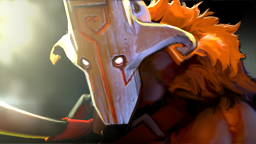
Juggernaut
Juggernaut turns attack speed into strikes: Omnislash swings about once a second at 100 attack speed and three times faster at 300; Blade Fury gives him 5 seconds where debuffs do not stick; Blade Dance fixes the crit chance at 35% and raises the crit damage by level — 14–35% more attack damage on average. What he cannot do is fight a crowd — the ultimate bounces to creeps, the spin covers 260 radius, and nearly every hero on his worst-matchup list brings bodies. The patch cycle is on his side for once: five touches in the 7.41 cycle, four of them buffs.
Patch verdict: four buffs in five touches this cycle — 7.41 rebuilt him, then 7.41a cut Blade Fury's cooldown to 30/26/22/18 and raised the crit to 140/160/180/200%, 7.41b added 5 move speed and doubled Bladeform's agility growth, 7.41c took Blade Fury to 85/115/145/175 damage per second, and 7.41d dropped its mana cost to 110. 7.41e and 7.41f did not touch him at all; 7.42 then reworked Blade Fury and moved the Scepter onto it.
Bracket verdict: the curve rises, then flattens — 51.34% in Herald, a peak of 53.43% in Ancient, 52.84% in Divine (OpenDota). dotacoach's 7.41f numbers agree on the shape: 50.4% in Herald, 53.8% in Ancient, 52.4% in Immortal. Neither source has a bracket below 50%.
Draft verdict: carry, and nothing else — 95.1% of his 141,724 tracked games are in the carry slot at a 53.0% win rate. Every other position is 2.2% or less and under 48%: offlane 45.2%, mid 47.9%, position four 46.8%.
Is Juggernaut still good in 7.41f?
Yes — and for once the patch notes are helping. The Juggernaut Dota 2 win rate sits at 52.71% across 758,276 public games in OpenDota's rolling window, and at 52.5% on a 19.6% pick rate in dotacoach's 7.41f numbers. Two independent sources, one conclusion: this is a solidly above-average hero with an enormous player base.
The trend matters more than the number. 7.41 rebuilt him — the innate became Bladeform and the Shard moved from Blade Fury to Healing Ward — and the four patches after it each handed him something: a shorter cooldown and a bigger crit, move speed and agility growth, more spin damage, and finally a mana cost of 110. 7.41e and 7.41f did not touch him — the buffs ended there, and the win rates below are still the version they built; 7.42 has since reworked Blade Fury and moved the Scepter onto it.
Most carries' win rates swing hard by bracket; his barely moves. His win rate climbs from 51.34% in Herald to 53.43% in Ancient and then gives back 0.6 points in Divine. That is a 1.5-point gain from Herald to Divine, or 2.1 if you stop at his Ancient peak — real, but small. Measured over the same Herald-to-Divine span: Necrophos loses 3.3 points and Outworld Destroyer gains 4.6. Juggernaut is roughly flat.
The flatness is the useful part. He is not a low-bracket stomper you have to abandon at Legend, and he is not a hero who only comes alive in high-MMR hands. He does the same thing at every rank: pin one hero down with attacks and survive the response with a 5-second debuff immunity window. What changes with rank is how quickly the enemy punishes you for using the wrong one of those two at the wrong time.
What position does Juggernaut play?
Carry. There is no second position. Across 141,724 tracked Juggernaut Dota 2 games, 95.1% of his appearances are in the carry slot — and that slot also happens to be his best, at 53.0% across 134,794 games. Everything else is noise: mid 2.2%, offlane 1.8%, position four 0.4%, position five 0.5%.
That is not a fashion trend, it is the kit. The three basic spells scale with levels — Blade Fury from 85 to 175 damage per second, Healing Ward from 2% to 5% max HP per second, Blade Dance from 140% to 200% crit — and the ultimate scales with attack speed, which is what gold buys. A carry gets the levels and the attack speed; a support gets the levels and none of the items that make Omnislash worth casting.
Look at the offlane number before you try it. 1.8% of his games are offlane and they win 45.2% — the worst figure in the table. The idea of a spinning strength-ish frontliner sounds reasonable until you remember his actual stats: 20 strength and 2.0 growth at 5.33 armor, which makes him one of the squishier melee heroes in the game, not one of the tankier ones.
The support versions are worse than the numbers suggest. Position five reads 47.8%, which looks survivable until you price the ward: it has 1 hit of health and gives the enemy 75 gold. A support Juggernaut is a hero whose entire contribution is a 260-radius spin and a 75-gold donation.
What's the Juggernaut skill build?
Max Blade Fury first, Blade Dance second, Healing Ward last. That is the order the ladder actually uses: 93.4% of parsed 7.41 games spend their first point on Blade Fury, 83.8% have Blade Fury as the first skill maxed, and Healing Ward's remaining ranks only show up at the thirteenth to fifteenth recorded points (56.2%, 63.0%, 65.7% of games at each).
The only real decision is the second point, and it is close to a coin flip: 48.4% take Healing Ward, 40.9% take Blade Dance, 10.6% put a second point into Blade Fury. Both answers are defensible and they mean different lanes — see the fork below.
One warning about reading this as a level-by-level build. OpenDota's recorded skill list often disagrees with the final hero level: in the 7.41 sample of 320 games it is shorter than the final level in 72.8% of games and longer in 17.5%, with attribute points and delayed talents mixed in. Treat "the tenth recorded point" as the tenth decision, not as level 10 — that is also why the talent shows up at the eleventh point here rather than the tenth.
 1
 23
 45
 678910111213141516171819
What's the Juggernaut Dota 2 item build?
Battle Fury at 13.8 minutes, Manta Style at 20.8, and after that the build opens up. That is not a suggestion — in 7.41 parsed games, 90.6% of Juggernaut players finish a Battle Fury, with a median completion time of 13.8 minutes: a quarter finish it before 12.6, a quarter after 15.0. When nine out of ten players buy the same item within about two minutes of each other, the build is settled and the only question is how fast.
The rest of the spine: Manta Style on 78.0% at 20.8 minutes, Butterfly on 54.7% at 26.3, Blink Dagger on 36.8% at 29.7, Aghanim's Scepter on 39.3% at 30.6. Power Treads (87.1% at 5.9 minutes) is the default boot; Phase Boots appear on roughly one player in eight.
Default build: Quelling Blade
 Branches ×2
 Magic Stick
 Tango→
 Boots→
 Magic Wand→
 Power Treads→
 Ring of Health→
 Battle Fury→Farm
 Yasha→
 Manta Style→Fight
 Butterfly→Initiate
 Blink Dagger→Luxury
 Aghanim's Scepter
Item win rates tell you who won, not what to buy. Manta Style buyers win 59.3% against 41.4% for non-buyers — a 17.8-point gap that collapses to +5.8 once you compare games of the same length. Most of that gap is winning teams getting to buy their items. Butterfly looks even better at +28.8 points, and it survives the same-length comparison at +25.1 — but its buy rate is 65.3% in Divine and above against 30.2% in the middle brackets, so what the number is mostly measuring is who is playing, not what they bought.
Maelstrom first is the number people get wrong. It appears in about 5.0% of Divine-plus games but 18.9% of mid-bracket ones, and its win-rate delta is -10.3 points. That is not "Maelstrom is bad" — it is players reaching for the cheaper farm item when they are already behind, in the bracket where being behind happens more often. If you are copying a build from a losing replay, this is the item you copied.
The Scepter upgrades the spin, not the ultimate. It no longer grants a second mobility spell: it lets Juggernaut attack during Blade Fury while moving, at 75% damage and 75% item potency, and keeps those attacks going even while stunned. Buildings are not attacked automatically. Buy it when you want the spin to be an attack window, not when you want a second ultimate.
How do you lane as Juggernaut?
You are not a lane winner, and pretending otherwise is how you lose the first ten minutes. In Juggernaut Dota 2, laning is a cooldown problem, not a damage race. 150 attack range, 54–56 damage and 5.33 armor on 560 health is a below-average melee start. What you have instead is Blade Fury: 85 damage per second in a 260 radius for 5 seconds, on a 30-second cooldown, with debuff immunity and +80% magic resistance attached.
Everything in the lane runs off that one cooldown. Spin to secure a wave and get the damage for free; spin before the stun or slow lands, so it never applies; and spin to chase — the storm is free damage while you run them down, and the immunity keeps you stuck to them. The one catch: Blade Fury fully disarms you, so your right-clicks, on-hit effects and item procs are all off for the whole spin. Stop spinning before you start hitting; with Aghanim's Scepter you can attack through it, at reduced damage.
Healing Ward is your only sustain, and it is made of paper. One attack destroys it, and it gives the enemy 75 gold. Place it behind your ranged creep, behind a tree, or inside the trees where a melee offlaner cannot comfortably walk — a ward that lives through a full wave heals far more than the 2%-a-second tooltip suggests.
One habit that pays for itself: stay unhit. Bladeform gives a stack every 2 seconds you take no damage, and each stack is 2.5% of your base agility plus 1% move speed. Farming a jungle camp between waves keeps the stacks rolling; walking through a creep wave and taking a hit drops them.
What do you do in teamfights?
You are the second one in, and you pick the target yourself. Omnislash is a unit-target spell with 450 range that turns your attack rate into strikes: the interval is 100 divided by your attack speed, plus 0.03 seconds — so 100 attack speed means about one strike a second, and 300 means about three. Everything you buy for attack speed is also an Omnislash item, which is why Manta Style is the second item and not a luxury.
Never cast it in a creep wave. Omnislash searches 425 radius for the next target after each strike and it will happily hit creeps, summons, and illusions — every strike that lands on a body you did not choose is damage that did not go into the hero you actually want to kill. This is also the entire reason his bad matchups are summon heroes.
The sequence that works: wait for the fight to commit, spin in with, or just ahead of, your front line so the opening spells hit the immunity window, drop the ward where the fight is going rather than where it is, then Omnislash the squishy target once their disables are spent. Spin does not save you from physical damage, and Omnislash does not let you choose where you land — the slashes carry you to whatever they hit — you are invulnerable, spell immune and untargetable during it, but you are also rooted and disarmed.
Do not forget you can act during the ultimate. You can cast items and spells during Omnislash except Blade Fury; you can also drop a ward mid-slash. The most common high-MMR Juggernaut mistake is treating the ultimate as a cutscene.
Who counters Juggernaut?
Heroes who bring more bodies than you can point at. Across 124,080 Juggernaut Dota 2 matchup records (about 24,816 Juggernaut games), his worst numbers are Chen at 35.7%, Lone Druid at 42.9%, Visage at 43.1%, Lycan at 43.1%, Beastmaster at 43.5% and Venomancer at 43.9% — plus Primal Beast at 43.9% and Enigma at 44.4%.
The mechanism is the same in every case, and it is not "they have more HP". Omnislash distributes its strikes across whatever is nearby, so every extra unit in the fight is a strike that missed. Blade Fury deals 85 to 175 per second inside 260 radius — enough to clear a wave over 5 seconds, nowhere near enough to kill a wolf, a bear, or an army while also fighting a hero. The one outlier in that list, Primal Beast, is the other failure mode: a hero you cannot burst down and cannot run from.
The full package is Beastmaster, on the biggest sample (1,057 games): a boar that slows you, a hawk that sees you, and an army that turns your ultimate into a creep-farming tool. One honest asterisk: in two much smaller windows he flips to Juggernaut's best matchup (62.3% on 61 records, 58.3% on 36), which is why this page quotes the large sample and still names him the one ban worth spending. The one worth respecting most is Chen at 35.7% — 14.5 points below the 50.15% average of this matchup sample, the biggest hole on the page.
Hardest matchups
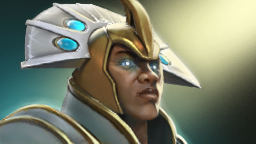 Chen35.7%
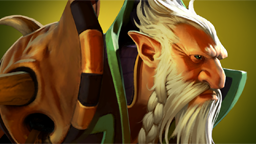 Lone Druid42.9%
 Visage43.1%
 Lycan43.1%
 Beastmaster43.5%
 Venomancer43.9%
Easiest matchups
 Tinker59.8%
 Arc Warden58.7%
 Bristleback56.4%
 Phoenix55%
 Zeus54.9%
 Silencer54.6%
Tinker at 59.8% is his best large-sample matchup — a hero with no escape who has to stand still to do damage, against a carry whose spin ignores the slows and whose ultimate closes 450 range instantly. On the losing side, Chen at 35.7% is the number to draft around: the test is not "can they kill me", it is "can they put something on the map that I have to hit".
35.7% — the worst number on the page, and the smallest sample that matters (454 games). Converted creeps give Omnislash more targets and give his push a clock you cannot race.
43.5% — the biggest sample (1,057) and the cleanest version of the problem: the boar slows the spin, the hawk tracks the farm, and the army eats the ultimate.
42.9% — the bear is a second health bar you cannot ignore and cannot kill with a 260-radius spin. Every strike you spend on it is a strike the Druid does not take.
43.1% — the familiars are physical damage you cannot out-trade, and a 260-radius spin cannot clear them before they finish the job. Three bodies also dilute the ultimate.
43.1% — howl, wolves, and a hero who out-runs you while you are rooted inside your own ultimate. Blade Fury's immunity does not stop a wolf from body-blocking your escape.
43.9% — Plague Wards are not in Omnislash's search list, so they do not dilute the ultimate; the problem is the poison, which keeps ticking after the spin ends.
59.8% — good for you: no escape, no summons, and a hero who has to stand still and channel to do anything. Spin in, ult, done.
58.7% — his clone is a body, but the original has no mobility and no answer to a 5-second immunity window plus a 450-range ultimate. Small sample (155), so treat it as a shape rather than a number.
Who does Juggernaut counter?
Single-target casters with no escape and no army. Tinker (59.8%), Arc Warden (58.7%), Bristleback (56.4%), Phoenix (55.0%), Zeus (54.9%), Silencer (54.6%), and Viper (54.4%).
The pattern is the inverse of his problem list: heroes who have to be somewhere specific to function. The biggest positive sample is not even on that list — Witch Doctor sits at 55.9% on 1,172 records and has no page here yet. Tinker has to channel; Zeus has to stand in range; Bristleback has to turn his back to survive. None of them creates a wall of bodies between you and them, so every strike in the ultimate lands where you aimed it.
Why is Yurnero called Juggernaut?
Because the name is older than Dota 2. Yurnero is the name the hero carried in the original DotA, the Warcraft III custom map, and when Valve rebuilt the game they renamed the hero Juggernaut and kept Yurnero as the person inside the mask. You will still find him called Yurnero in guides, in tournament chat, and in his own voice lines.
The developers never actually let the name go. It is written into the ability lore in the live client: Blade Fury's is "Yurnero's renowned katana techniques are feared by warriors and sorcerors alike", and Blade Dance's ends with "Yurnero ensures that the style is remembered". So if you searched for Yurnero, you are in the right place — there is no second hero by that name.
Things the tooltip doesn't tell you

Any off-meta ideas?
No — and this is the most settled position on the whole page. 95.1% of his games are carry, and the three roles people try instead are small, self-selected samples: offlane 45.2% on 2,581 games, mid 47.9% on 3,064, position four 46.8% on 740. Those numbers describe who ends up in those roles, not what the role does to the hero — the only stable finding here is the distribution itself.
The one niche worth naming is mid — 2.2% of games, 47.9%. It is not a strategy so much as a consequence: you end up there when your team already has a carry and a free mid, and what you give up is the farm priority that puts Battle Fury on the map at 13.8 minutes. The sample (3,064 games) is too small and too self-selected to promise anything.
Don't step in these traps
Your checklist is short: farm the Battle Fury by 13.8 minutes, fight only where there are no extra bodies, and pick your own Omnislash target. After that it is just timing — and that is the one thing DOTA timer does for you: Bounty Rune, Wisdom Rune, Lotus, Tormentor, Roshan, pinged on time with voice reminders. All you do is play.