NEW
Support · Frontline · the lowest-INT hero in all of Dota (locked at 0)

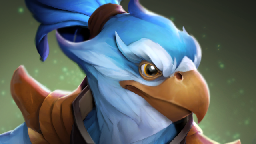
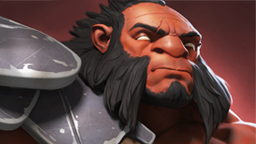
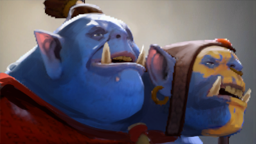
Ogre Magi

If you want to brawl from level 1, pick him. Other supports live off their spells — Ogre lives off his stats: stand up front and take hits for your carry, Bloodlust them for attack speed, and with a little luck one stun becomes four.

Patch 7.41f · Ogre Magi last changed 7.41d · page updated Oct 6, 2026
⚡ 30-second rundown

This hero lives off his stats: don't feed early, Bloodlust your carry, hold Fireblast for the key target.

Patch verdict: the lower the bracket, the stronger he is — Herald 52.8%, Immortal 48.3%.

Draft discipline: in high brackets, if the enemy locks in Phoenix, don't pick Ogre.

Is he still good this patch?

Yes, he is. But this hero has one very concrete trait: the lower the bracket, the stronger he is — the higher, the weaker. That's not a feeling; it comes from over 700,000 recorded matches:

Herald
52.8%
Guardian
51.7%
Crusader
51%
Archon
50.5%
Legend
50.3%
Ancient
49.5%
Divine
48.5%
Immortal
48.3%
Line = 50% win rate

Pick rate plummets the same way: he shows up in 21.3% of Herald games; by Immortal it's down to 8.5%. High-MMR players figured this out long ago.

Pick your bracket — I'll tell you whether this hero is worth picking there.
My bracket:

And here's what catches most players off guard — Ogre wins trades in lane, but that doesn't win games early. His gameplan isn't "stomp lane and snowball"; it's "don't feed early, be useful later":

≤15 min
42.6%
15–25
47.1%
25–35
49.8%
35–45
49.6%
45+
50.1%
Line = 50% win rate

Win rate before 15 minutes is only 42.6%, and it doesn't crawl back to even (49.8%) until after 25 minutes — it only breaks 50% past the 45-minute mark (50.1%). So if your lane goes badly, don't panic: you're not an early-game hero. If it goes well, don't get cocky: your power spike hasn't arrived yet.

What's the skill build?

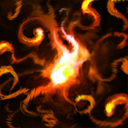
The short answer: max Ignite → max Bloodlust → ult whenever you can → Fireblast last. That's right for eight out of ten games:
1
·
2
·
3
·
4
·
5
·
6
·
7
·
8
·
9
·
Talent10
·
11
·
12
·
13
·
14
·
Talent15
·
16
·
+2
17
·
18
·
+2
19
·
Talent20
·
+2
21
·
+2
22
·
+2
23
·
+2
24
·
Talent25
Note the first four levels: Ignite → Ignite → Fireblast → Bloodlust. No Bloodlust at level 2 — 52% of players take a second point of Ignite at 2; only 17% go Bloodlust.
IfThe enemy can purge Ignite, or the enemy team is full of heroes you can never catch — Storm Spirit, Ember Spirit, that sort
thenshift the points into Fireblast — a purged Ignite that never burns is half a spell.
But it's a forced choice, not a good one: maxing Fireblast is what 2.9% of players do, at a 40.0% win rate — the worst of the three builds (Ignite max: 54.9% of players, 52.9% win rate; Bloodlust max: 41.5% of players, 47.4% win rate).

Talents have no one-size-fits-all answer — every tier is a judgment call:

10
Dumb Luck: +2 mana / +0.01 regen per Strength
You're stacking Strength this game (Gauntlets, Drum, Heart)
+10 Ignite burn damage
You're the lane bully and Ignite needs to hurt more
15
+20 / +35 Bloodlust attack speed
Your team has a carry who lives off right-clicks
+80 damage
The carry doesn't right-click — you have to bring the damage yourself
20
+175 Fireblast damage
You have Aghs and the team counts on your Fireblast for damage
+30 Strength
In an even game that drags late — tankiness, mana, and multicast chance in one package
25
+10% Multicast chance
You're not right-clicking as a support — stack the odds
17% chance attacks trigger Fireblast
Only for right-click Ogre (see the off-meta section)

What's the item build?

Default build:Gauntlets ×2Tango→Arcanes→When ahead Midas→Team items

Gauntlets of StrengthGauntlets are the real deal. Strength is a four-in-one for Ogre: HP, damage, mana, and Multicast chance (1% per 16 Strength). When you're unsure about items, lean Strength and you'll rarely be wrong.

Arcane BootsBoots: Arcanes. It's what the vast majority buys, and the data agrees. Someone will try to sell you Soul Ring plus Tranquils — that's a style choice, not the default.

Aghanim's ShardBuy Shard early — it's this hero's power spike. Fire Shield isn't just a damage block — on a multicast it can cover several allies within 1000 range at once. Before a fight, put it on whoever the enemy is likely to focus — the next 3 hero attacks on them deal 85% less damage. Careful: Fire Shield comes from Shard, not Aghs — don't buy the wrong one.

Hand of MidasMidas: buy it when ahead, never when behind. It feels amazing (who doesn't love a multicast Midas?), but high-bracket players actually buy it less — and its payoff mostly only shows up in games you're already winning. A naked Midas in a losing game makes you that guy in your team's eyes: no wards, no ganks, still farming the jungle.

Never buy an item for its INT — it does nothing for you. Ogre's intelligence is locked at 0, so INT gives him no mana and no spell amplification at all. On items like Force Staff or Sheepstick that come with INT, you're paying for stats that do nothing — buy them only for the active.

How do you play the lane?

One sentence: your HP and armor are a spell. Other supports harass with positioning and skillshots; Ogre harasses by simply standing there. At level 1 almost no support out-trades you, so don't hide behind the ranged creep — plant yourself between the enemy support and the wave.

Enemy support is melee? The lane is yours. Every time he walks up, you punch him; whoever flinches first loses the lane. Enemy is ranged with a slow? Don't commit — walking up there isn't pressure, it's feeding. Stay beside your carry and chip away with Ignite.

Make Ignite do two jobs at once: burn the hero and secure the ranged creep. Ogre's mana is precious early on — a spell that only does one thing is a wasted cast.

Four minutes in and losing the lane? Stop fighting it — go pull. One exception: if your carry is freezing the wave under tower, leaving means he dies — pulling then is griefing.

Every hit you take is a hit your carry didn't.

What do you do in teamfights?

Once laning ends, your value shifts from your stats to your spells. Bloodlust goes to the core who's currently fighting — not the one still farming jungle. Once it's leveled the cooldown is short; tossing it on the siege creep while pushing is free value.

Fireblast is the opposite discipline: hold it for the one enemy who "must not get their spell off." Multicast doesn't splash — every proc hits the same person — so tossing your stun at their frontline is the biggest waste this hero can make. Overextending to reach their backline and dying is even worse, though: a living Ogre stunning anyone beats a dead Ogre holding the perfect target.

Once you have Shard (Fire Shield comes from Shard, not Aghs), Fire Shield goes on whoever is being focused — sometimes that's you, and there's no shame in it. Its cast point is 0.2 seconds, the fastest button you've got; it's the one that saves your life. Towers can take it too.

Bloodlust the right ally, Fireblast the key enemy, Fire Shield the dying one.

Who's the worst to face?

See any of these on the enemy team? Give yourself three seconds before locking in Ogre:

Hardest matchups
Phoenix36.9%
Kez41.3%
Earth Spirit41.6%
Slardar41.6%
Viper42%
Axe42.9%

Easiest matchups

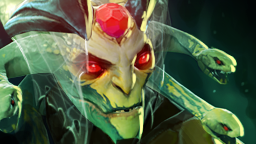
Medusa63.6%
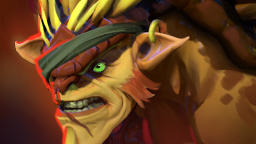
Bristleback62.7%
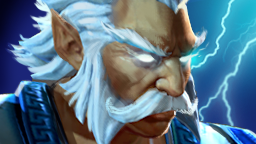
Zeus58.3%
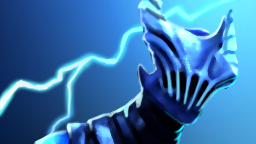
Razor55.6%
Morphling54.7%

Phoenix at 36.9% is close to unplayable: Fire Spirits gut your attack speed so you can't trade, and Supernova hides him inside an egg your stun can't touch. On the flip side, if the enemy has Medusa or Bristleback, this game is yours to enjoy.

Tap an opponent:

Things you might not know

Ogre is the only hero in Dota whose intelligence is locked at 0.
To make up for it, his innate "Dumb Luck" grants 6 mana and mana regen per point of Strength. So stacking Strength is stacking mana — the core item logic of this hero, and almost nobody spells it out.
Multicast doesn't fire all at once.
It comes out in segments, 0.6 seconds apart. So your "4x Fireblast" is actually a chain of stuns: the enemy gets half a second to react — and your teammates get that same half second to follow up with damage.
Multicast Fireblast hits the same person; multicast Ignite splashes everyone nearby.
The official notes are explicit: multicasting Fireblast "hits the same target repeatedly," while Ignite, Bloodlust and Fire Shield spread around. To lock down one person, Fireblast; to burn a whole area, Ignite — Ignite's splash radius is 1400, Bloodlust's only 700, half the reach.
Ignite's burn duration stacks — but normal casts can't stack it.
The official wording is "adds to the burn duration." But Ignite has a 17-second cooldown and an 8-second burn, so recasting can never stack it. What actually stacks is Multicast hitting again within those 0.6-second gaps — and since multicast prefers targets "not yet ignited," even that is rare. Don't count on it.
Fire Shield blocks 3 attacks — and has a 25-second timer.
It cuts the damage of the next 3 attacks from enemy heroes by 85%, for up to 25 seconds — whichever runs out first. Recasting refreshes the timer and resets the 3 charges. Each absorbed hit also fires a fireball back at the attacker (160 damage). Against Phantom Assassin-style right-click burst it's godly; against slow chip damage it does little. Towers can take it too.
Multicast only works on items that target enemies — and it throws in 600 extra search radius.
Items that target enemies — Midas, Sheepstick — can multicast. Quelling Blade and Tango target trees, so they never do. And when it triggers, you get 600 extra search radius around yourself, so it can multicast onto enemies outside your normal cast range.
When you're being chased, Fire Shield is the only thing you can get off.
Its cast point is 0.2 seconds, the fastest in your whole kit (Fireblast and Bloodlust both take 0.45 and get interrupted easily). When it's life or death, don't hesitate — it's this one.
Bloodlust gives yourself more attack speed than it gives allies.
Allies get +35/50/65/80; you get +40/60/80/100. If it's time to be selfish, be selfish — no downside.
You can't "prime" Midas — but you can set it up.
"Wait for a non-multicast first, then Midas" is overthinking it — the multicast roll happens on the cast itself, and the real edge comes from more targets. Pull the nearby camp over first, so a multicast Midas has extra creeps to land on.
Aghs now does two things, not one.
Since 7.41, Aghs grants the new ability Unrefined Fireblast and upgrades your regular Fireblast (shorter cooldown, 25% faster cast). Most old guides only mention the first half.
Bloodlust works on towers, barracks, and couriers.
Don't forget it when pushing. One caveat: since 7.40 it can't target invulnerable units (invulnerable buildings excepted), so old tricks like "Bloodlust the Aegis" probably no longer work.
Level 1 of your ult already has a 75% chance to double.
Leveling the ult only raises the 3x and 4x chances, never the 2x. So the point at level 6 is one of the most efficient skill points in the game — don't delay it.
Losing Facets was a silent nerf to Ogre.
7.41 deleted Facets entirely. Ogre had two: one's effect was folded into Multicast (no real loss), the other — "learn abilities one level early" — simply vanished. So every Facet guide online, including several popular analyses, is completely outdated. Don't read them.

And some off-meta ideas

None of these are validated by big data, but every one has real players using it — with a real argument behind it. Curious? Try one in a game and see if it fits you.

Skip Arcanes. Go Soul RingSoul Ring + Tranquil BootsTranquils and sink the saved gold into Midas or team items earlier.
The reasoning:Arcanes solve your mana pool; Soul Ring solves mana regen speed — for a hero spamming spells all game, that might actually be more efficient. But the data says Arcanes are the default — so this is a style choice, not the standard.
How to check it yourself:Play three games and count how often you couldn't cast because you were OOM. If it beats your Arcanes games, it fits you.
Start with three Gauntlets of StrengthGauntlets. Your level-1 attack goes from 45–51 to 54–60 (+9 Strength) — enough to walk up and start swinging.
The reasoning:Strength pays Ogre four ways anyway — HP, damage, mana, and Multicast chance — so Gauntlets are never wasted. But you have zero regen, and into a heavy-harass duo lane you'll just have to tank it.
How to check it yourself:Watch the level-1 fight and the first three waves. If you're the one doing the bullying, it holds up; if you limp home half-dead, this lane isn't for it.
Mid Ogre, right-click Ogre — farm your way into damage with Midas and Aghs. People make videos under an "80% win rate" banner, and even pro player Ceb has run offlane Ogre.
The reasoning:Reality check: the data says core Ogre wins only 44.7%, and pro drafts basically never pick him. Videos only show the wins — nobody posts the losses. Trust the videos or the data: queue one game and you'll have your answer.
How to check it yourself:Check your damage after the game. If right-click Ogre didn't crack 25% of the team's damage, that win had nothing to do with you.
Stack movement speed items like Drum of EnduranceDrum and treat move speed as your core stat.
The reasoning:"Move speed is just range by another name" — Fireblast only reaches 525 with a 0.45s wind-up, so if you can't catch them it might as well not exist. But move speed won't stop interrupts — the spells you need to dodge, you still need to dodge.
How to check it yourself:Count how many times a game you're "one step short of the stun." More than three? The speed build is real for you.
Past 12–15 minutes, stop catching spells with your face — fall back and just cast.
The reasoning:All your spells are small and low-cooldown: alive, you cast forever — die once and it's all gone. By that point the enemy can one-shot a support. Unless nobody else on your team can take a hit — then stepping back collapses the formation.
How to check it yourself:Check your deaths after minute 15. If they outnumber your first ten minutes, you've been catching spells.
Take Bloodlust at level 2 instead of the second Ignite point.
The reasoning:It hands your core +35 attack speed for 30 seconds — a real last-hitting and trading edge in lane. The cost is your second point of Ignite, and your harass gets weaker.
How to check it yourself:Watch your carry's last hits in the first ten minutes. If Bloodlust doesn't lift them, the problem isn't your build.
For your first late-game big item, consider Scythe of VyseSheepstick.
The reasoning:The value is the active hex, and Multicast works on targeted items — with luck, a multicast hex. But the INT is completely wasted on him, so you're paying 5675 gold for the active alone. The counterargument: Ogre has no great late-game item anyway, so the wasted INT costs less than it looks.
How to check it yourself:Check the replay and count your multicast hexes. If none triggered all game, those 5675 gold went to the wrong place.

Don't step in these traps

✕
Naked Midas. "No wards, no ganks, sitting in the jungle farming — your team is fighting and you're busy Midas-ing." It's the #1 way to get reported on support Ogre, and a guaranteed team-tilter in low brackets.
✕
"Wait for a non-multicast before Midas." Overthinking it — the multicast roll happens on the cast, and the real edge comes from setting up more targets.
✕
Mindlessly maxing Fireblast. Only 2.9% of players skill this way. It's not unplayable — it's for purge and slippery matchups — but maxing it without reading the draft is throwing.
✕
Playing Ogre as a core. Core win rate is 44.7% — the only role where he's below 50%. The 80% win rates in videos are cherry-picked.
✕
Reading Facet guides. Facets were deleted entirely in 7.41. Every "which Facet do you pick" piece — including plenty of popular analyses — is now archaeology.
Go queue a game

You already know what Ogre should do — the only question left is when. Queue with DOTA timer running: Bounty Rune, Wisdom Rune, Lotus, Tormentor, Roshan — it pings on time with voice reminders. All you do is play.

Open DOTA timer →

Updated Oct 6, 2026 · Patch 7.41f · Ogre last changed 7.41d