
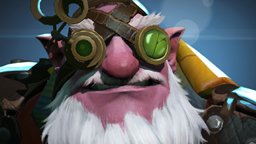
Sniper
Sniper Dota 2 is a ranged agility hero whose damage is paid out by distance: Take Aim's passive is what makes him long, and Keen Scope adds a slice of attack damage for every 100 units between him and his target, so a shot at point-blank range gains nothing. His 7.41f public win rate is 50.26% over 4,220,839 ranked games, and it falls as the bracket rises. Play him mid, keep the fight at the edge of your range, and treat the 65% self-slow on Take Aim's active as a commitment rather than an escape.
He now plays more like a mid ranged core than a traditional safe-lane carry. His strengths are range and Shrapnel wave control, letting him hit before enemies can reach him. His weakness is repeated dives: Take Aim also slows him and narrows his vision, so it is not an escape.
7.41f made no further changes and he is roughly even. Max Shrapnel, build Power Treads into Maelstrom, then Dragon Lance and Mjollnir. Buy the Shard when divers keep reaching you; Aghanim's Scepter is not a default.
Fight from maximum range and wait for the enemy to use its gap closers before activating Take Aim. Use Assassinate before the fight to soften a target or to finish a low-health one. Once your midgame items arrive, push towers with your team instead of playing only for the late game.
Is Sniper still viable in Dota 2 7.41f?
Yes — a coin flip in public ranked, and a stable one. In 7.41f he wins 50.26% of 4,220,839 ranked games with a 20.11% pick rate and an all-hero tier rank of 52/127. OpenDota's separate rolling public sample reads 49.97% across 832,730 games, 0.29 points away from Batru's figure. Two independent pipelines landing that close is as settled as public data gets.
He gets worse as the bracket gets better. OpenDota's seven brackets run from 52.03% in Herald down to 47.55% in Divine, and that source returns no Immortal bucket for him. Batru's four combined brackets run from 51.07% in Herald and Guardian, where he ranks 40 of 127, down to 48.55% in Divine and Immortal, where he ranks 83. The two sources cut brackets differently and disagree on the size of that drop — 4.48 points across OpenDota's seven brackets, 2.52 across Batru's four — so keep the direction and drop the precision. In Batru's brackets the pick rate falls faster than the win rate: 26.33% at the bottom, 10.26% at the top.
His win rate falls as games get longer, which is a correlation rather than a promise. Batru's model estimate puts his team at 58.6% in ranked games that end before 34 minutes and 47.7% in games that reach 47 minutes, ranking his late-game edge 125 of 127, with 29% of his games going that long. That is a model estimate rather than a raw count, and a game running long partly reflects a team that could not close. OpenDota's duration buckets point the same way — 54.74% at 20 minutes against 41.49% at 55 minutes — on a 1.5% slice of public games, so use it as a second direction, not a second number.
Pro teams treat him as a low-heat pick they are happy to take. The 7.41 window holds 8,839 league games; Sniper is picked in 6.97% of them and banned in 5.62%, and the 627 games he played were won 53.11% of the time. More picks than bans means teams want him on their side rather than out of the pool. The window spans seven months and six sub-patches, and the 14 games played on 7.41f itself are too few to read, so 53.11% describes the reworked hero over the window, not last week's meta.
Nothing happened to him in 7.41f. The patch contains no Sniper entry; the last change was 7.41e, and it only let Concussive Grenade be cast while rooted. The structural rework was 7.41 in March: facets were removed from the game, attack range moved off the innate Keen Scope and onto Take Aim, and Keen Scope became a damage passive that scales with distance. His public win rate has stayed between 50.05% and 51.56% in every sub-patch since, which is why the mechanics below matter more than any balance story.
Which position should Sniper play?
Mid is the mainstream public role and the highest win rate on the role table. In a separate 342,659-game role sample, 61.2% of games are mid (n=209,680), where he wins 50.8%; carry is 14.6% (n=50,075) at 48.6%. Mid is also where the kit fits: levels come faster, Shrapnel covers the rune fights, and the lane is short enough that a bad matchup can be survived. Pro is more one-sided in the same direction — 75.0% of 627 games start mid and 24.1% start in the safe lane — but the safe lane's 58.94% on 151 games against 51.49% mid is not statistically significant and is not a reason to lane him there. The two samples also measure different things, so never subtract one from the other.
Carry is real but smaller, and it is a different job. A carry Sniper earns more gold — the role table shows 612 GPM against 591 for mid — but carry is a minority lane, and the job it asks for is different: he wants levels and a tower window, not twenty minutes of free farm. If you do play him in the safe lane, keep the build and change your expectations.
The support numbers are the worst on the table. Support is 14.7% at 46.9% and hard support 6.3% at 46.2%, which together is 21.0% of the role-recorded games. People do queue him as a support caster, but the kit still wants the gold and levels a support does not get.
One caution about labels. The hero's role tags still list carry as his primary role; that is the game's description of his kit, not the lane players put him in. Follow the lane data: mid first, carry second, support only as an experiment.
What actually changed in 7.41?
Facets are gone, so there is nothing to choose at the start of the game. 7.41 removed facets from Dota entirely, which deleted Shrapnel's Scattershot and Take Aim's Ghillie Suit along with everyone else's. Any page that tells you to pick a facet is describing the hero from before March 2026.
The attack range moved house. Until 7.41 the innate Keen Scope was the thing handing out range, and it grew with Assassinate's level. Now Keen Scope gives no range at all: the range is Take Aim's passive, 160/240/320/400, and the active adds 75/150/225/300 for 3 seconds. From a 550 base that is 950 standing still at max rank, 1250 with the active up, 1000/1300 after the level-10 range talent, and 1130/1430 once Dragon Lance adds its 130.
Keen Scope became a damage amplifier keyed to distance. Attacks deal an extra 1.5% of attack damage per 100 units of distance, plus 0.05% per hero level — exactly 2.00% per step at level 10. At 550 range that is roughly 12% extra damage; at 1430 full range it is about a third. At zero distance it is zero. The same bonus now rides on the physical hit that Assassinate lands, which is why a long shot hurts more than the tooltip implies.
Two follow-up patches trimmed the edges. 7.41d stopped Keen Scope from working on denies and buildings. 7.41e let Concussive Grenade be cast while rooted, though it does not push Sniper himself in that state. Then 7.41f arrived with no Sniper entry at all. A build taken from a pre-7.41 page still has the right shape — Shrapnel first, Take Aim late — but the range numbers and the Assassinate maths have moved under it.
What is Sniper's skill build?
Max Shrapnel, then Headshot, and leave Take Aim's max for last. In the pro sample 75.6% of games max Shrapnel first, with the fourth point usually landing around the seventh skill entry; 21.7% max Headshot first; 2.6% max Take Aim first. Shrapnel is the wave clear, the rune-fight tool and the charge bank all at once, so it is the least replaceable of the three.
Level one is a coin flip, so do not treat either opener as the rule. 49.0% of the pro sample opens with Shrapnel, 49.6% with Headshot, and 1.4% with Take Aim. Take Shrapnel when a rune fight or an early push is likely; take Headshot when you expect to trade hits and contest last hits under pressure.
There is no standard sequence, so this template follows the majority on the one slot that matters. 64.2% of pro games take Assassinate the moment it is available at level six, and this template does that. The single most frequent ten-point sequence — 6.7% of games, 42 of 627 — is a different animal: it delays Assassinate to ten and takes Take Aim at six. With 285 distinct ten-point sequences in the sample, the stable information is the max order, not the exact slots.
The rest of the order is a max-order rule, not a script. Take Aim gets its first point at 4 in this template (the no-early-point version waited until 11), then 13, 14 and 16, so the fourth lands around the fifteenth entry. Shrapnel is still maxed at 7 and Headshot second at 11. Across the first 18 skill entries the averages are 3.91 points in Shrapnel, 3.98 in Headshot, 3.94 in Take Aim and 2.77 in Assassinate — the ultimate is the skill that gets left short.
 1
 23
 45
 678910111213141516182025
What items should Sniper buy?
A practical Sniper Dota 2 build is Power Treads, Maelstrom, Dragon Lance, Mjollnir, and after that every slot is a read on the game. In the pro sample Treads are bought in 98.6% of games at a 5.8-minute median, Maelstrom in 69.2% at 12.6, Dragon Lance in 90.0% at 16.5 and Mjollnir in 55.7% at 19.2. Of the players who buy a Maelstrom, 80.4% finish the Mjollnir, so treat the upgrade as the plan rather than an option.
The first major item is one of four, and all four land at the same time. Maelstrom is first in 47.4% of games at an 11.7-minute median, Mask of Madness in 17.0% at 10.2, Dragon Lance in 15.7% at 10.9 and Specialist's Array in 12.0% at 9.3. Together they cover 92.2% of the 624 games with an identifiable first item, and every one of them arrives between nine and twelve minutes. This is a four-way choice at one timing, not a ladder of upgrades.
The lance comes second, not first. Dragon Lance has a 90.0% total purchase rate but only 15.7% as a first item, so in most games the order is Maelstrom then lance. The lance costs 1,900 gold and adds 130 attack range; Hurricane Pike costs 4,450 and adds the same 130; the two items do not stack with each other, so upgrade rather than double up — the base, passive, talent and active range still add on top. Force Staff (38.6%) and Pike (37.6%) are two stages of one item, and their purchase rates overlap — never add them together.
The Shard is the anti-dive item; Aghanim's Scepter is not a core. Aghanim's Shard appears in 38.1% of pro games at a 25.0-minute median and grants Concussive Grenade: 475 knockback in both directions, a 3-second disarm and a 10-second cooldown. Scepter is 9.4% at 21.0 minutes: it cuts the 2-second Assassinate cast to 0.5 seconds and adds a 0.8/1.0/1.2-second stun. Black King Bar is only 14.2%, at a 29.8-minute median — in this sample, pros rarely buy their way out of being jumped.
The late slots are situational and thin. Daedalus is 17.1%, Monkey King Bar 12.9%, Butterfly 6.9% and Satanic 4.5% in the pro sample, all of them bought after the core is finished. Buy damage when your team can keep people off you; buy the defensive option when it cannot. Blink Dagger (6.7%) and Silver Edge (16.1%) show up as mobility answers to a specific diver, and neither replaces the Shard's disarm.
Default build:Starting items  Tango
 Slippers of Agility ×2
 Circlet
 Iron Branch→Lane and early farm
 Wraith Band
 Power Treads
 Magic Wand
 Wind Lace→First major item: Maelstrom by default, with three alternatives at the same timing
 Maelstrom
 Mask of Madness
 Dragon Lance
 Specialist's Array→Dragon Lance — second item, about 16.5 min, +130 range (90% of pro games) Dragon Lance→Finish the lightning
 Mjollnir→Force Staff + Dragon Lance → Hurricane Pike — Lance/Pike range bonuses do not stack with each other, while base, passive, talent and active range do add
 Force Staff
 Hurricane Pike→Anti-dive
 Aghanim's Shard→Situational damage or defense
 Black King Bar
 Aghanim's Scepter
 Daedalus
 Monkey King Bar
 Satanic
Which talents should you take?
Level 10 is close to fixed. 83.0% of the pro sample takes +30 Headshot damage (517 games, 53.97% win rate) over +50 Take Aim passive range, which lands at 11.7% on 73 games. That second number is under a hundred games, so read it as a direction only: the range talent is not proven bad, it is just not what the sample does.
Do not read the level-15 win rates as a recommendation. 77.5% take +45 attack speed during Take Aim (451 games, 53.22%), while the minority +150 Assassinate damage pick is 19.9% on 116 games and shows 63.79%. That gap is not evidence that the damage talent is stronger: games that reach level 15 and record a talent already win 55.50% of the time, well above the window's 53.11%, and a team that is ahead is more willing to spend a talent on finishing kills.
Level 20 is effectively a no-choice. 82.1% take +2 seconds of Take Aim (317 games, 64.67%). The +30% Shrapnel alternative sits at 61 games and 65.57%, a 0.90-point difference on a sample that cannot support it. Take the duration, and take it because five seconds of 100% Headshot is the closest thing this hero has to a teamfight button.
Level 25 has no answer. +50 knockback distance (53 games) and −30 seconds of Shrapnel recharge (29 games) are both too small to judge. Pick for the game: the knockback if melee heroes keep reaching you, the recharge if you want to hold ground — it takes Shrapnel from 35 seconds a charge to 5.
How do you counter Sniper?
The counter is distance: take his away and there is nothing left to be afraid of. Keen Scope pays per 100 units, so a hero standing on his face is dealing with plain attack damage, because Keen Scope adds nothing at zero distance; Headshot's knockback maxes out at 50 units and will not reset a fight; and the range itself is Take Aim's passive, so Break drops him from 950 back to 550. The heroes that beat him are the ones that arrive without walking through your team.
The public matchup table is unambiguous about which ones. Spectre is his worst opponent at 42.88% across 291,653 games, followed by Phantom Lancer at 45.05% (249,897), Wraith King at 45.57% (276,033), Nyx Assassin at 45.96% (170,336) and Pudge at 46.04% (546,009). Those are public ranked numbers, and each one is Sniper's win rate when that hero is on the other team — it includes how good that hero is in general, so it is a drafting signal rather than a duel result.
The pro matchup list is too small to copy. The largest pro sample for any opponent across the 7.41 window is 227 games (Rubick, 49.78%), and almost every opponent has fewer than 50 games against him. Where the two views disagree, sample size decides: Phantom Lancer is 72.73% in 22 pro games and 45.05% in 249,897 public games. Use the public table.
Black King Bar blocks half of Assassinate, and both halves of that sentence matter. BKB grants debuff immunity, which stops the 300/400/500 magic damage and the 0.033-second ministun; the physical hit still lands, and it carries the attack damage and the Keen Scope bonus, while the true sight — the reveal that keeps the target visible through invisibility — still applies. A target that is hidden, invulnerable, spell-immune (a different state from BKB's debuff immunity) or untargetable cancels the cast outright, and you lose 175 mana and the cooldown with it. That is why the shot belongs before the fight, not in the middle of it.
Lowest win rates against these heroes
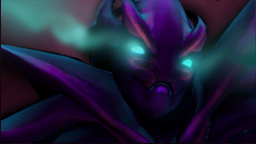 Spectre42.88% · n=291,653
 Phantom Lancer45.05% · n=249,897
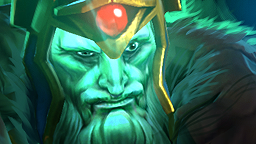 Wraith King45.57% · n=276,033
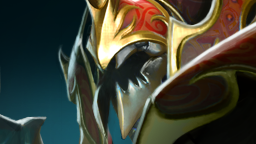 Nyx Assassin45.96% · n=170,336
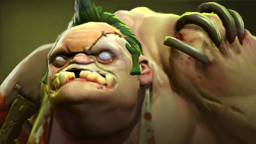 Pudge46.04% · n=546,009
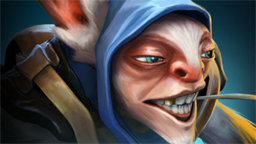 Meepo46.08% · n=41,558
 Legion Commander46.18% · n=330,890
 Arc Warden46.18% · n=99,807
Highest win rates against these heroes
 Shadow Fiend57.8% · n=263,730
 Batrider56.98% · n=23,772
 Shadow Demon56.9% · n=43,467
 Tiny56.64% · n=110,952
 Chen56.4% · n=10,268
 Nature's Prophet56.32% · n=210,771
 Beastmaster56.31% · n=44,606
 Medusa56.2% · n=56,476
7.41f ranked public matches from Batru. Each number is Sniper's win rate when that hero is on the enemy team, with the game count on its row. These figures include each opponent's overall strength and are a drafting reference, not the result of an isolated duel. The pro matchup sample is far smaller and is not shown here.
How should you play the laning stage?
Control the wave with charges, not cooldowns. Shrapnel has 3 charges at 35 seconds each, no cooldown, a 1.2-second delay before the first tick and a 400/425/450/475 radius. Spend one charge to shove a wave or secure a rune, keep two for the fight that follows, and remember that three empty charges is 105 seconds without wave clear.
The first real kill window comes once Shrapnel is level 2. On the Headshot opener that is hero level 3, and the damage per second is real then; the charge bank is what turns a trade into a kill: put two casts between the enemy and their tower and the retreat path is gone while you right-click. The delay matters — cast where they have to walk, not where they are standing.
Headshot is your last-hit and trade tool, not a defensive one. It procs on 40% of attacks for 20/50/80/110 bonus damage plus a 100% move slow and 100 attack speed slow for 0.2/0.3/0.4/0.5 seconds. The knockback is only 50 units at point-blank and less at range, so it will not push a diver off you; it will win you a last-hit contest.
Your night vision is a real laning advantage, and a warning. At 1400 you see further at night than most heroes' 800, so you get the first attack in every night trade. The flip side is that the first night is when a smoke gank is aimed at you, which is the single most common way this lane ends badly.
Do not skip the small items to rush damage. Wraith Band shows up at a 1.9-minute median in the pro sample and Treads at 5.8, and those two are what let you stay in lane long enough to reach the 12.6-minute Maelstrom. A Sniper who is behind on levels has no fallback: there is no escape spell to buy time with.
How should you play teamfights?
Your damage is a function of your position, so pick the position first. Keen Scope pays 1.5% of attack damage per 100 units plus 0.05% per level, which at level 10 is roughly 12% at 550 range; at 1430 full range it is about a third. Standing one step closer is not a small mistake; it deletes a visible slice of every attack you make.
Take Aim's active is a commitment, not an escape. It adds 75/150/225/300 range and sets Headshot to 100%. It also adds 500/750/1000/1250 forward vision, but that is not a wider view: your vision is cut to a 140-degree cone, so everything outside it — including directly behind you — goes dark, and you are slowed by a flat 65% for the 3 seconds. Press it when the enemy's gap closers are already spent and your team is between you and them. Pressing it as someone lands on you is how you die standing still.
Shrapnel is for space and vision before it is for damage. Each cast gives 450 radius flying vision for its full duration, which is how you check a high-ground approach or a Roshan pit without walking into it. It deals 30/45/60/75 per tick over 10 seconds, which is decent against creeps and heroes and exactly zero against buildings.
Assassinate is a pre-fight spell. 2 seconds of cast time means anyone already on top of you gets free hits while you stand there; Aghanim's Scepter cuts that to 0.5 seconds and adds a 0.8/1.0/1.2-second stun, which is the entire reason the item exists. The range is 3000 with a 600-unit buffer, and the 0.033-second ministun is enough to break a channel or a teleport. A kill resets the 20/15/10-second cooldown, so a chain of kills never waits on it.
The Shard is your answer to the one hero who keeps arriving. Concussive Grenade throws enemies 475 units, disarms for 3 seconds and slows by 50%, on a 10-second cooldown and 50 mana. Since 7.41e it can be cast while rooted, though it will not push you out of the root. Aim it so the knockback sends the diver away from your team, and remember it moves you as well.
What don't the ability descriptions tell you?
Which mistakes should you avoid?
Are any off-meta builds worth considering?
The carry route is a minority, not a secret. Public carry is 14.6% at 48.6%. In the pro sample 24.1% start in the safe lane, but that measures where he started rather than how the game ended. If you play him in the safe lane, the item build does not change; the lane does.
Support Sniper exists and is the weakest version of the hero. 21.0% of role-recorded public games across the two support roles, at 46.2%–46.9%, and zero pro games. It plays as a Shrapnel-and-Assassinate caster, and Aghanim's Scepter is the luxury version if the game allows it. There is no public purchase-rate data for support Sniper, so treat it as a way to play rather than a way to win.
The caster line is real but tiny in pro. Phylactery shows up as a first item in 15 pro games, which is too few to read, and Aghanim's Scepter is bought in 9.4% of games at a 21.0-minute median. That is a legitimate response to a game where you cannot stand and trade, and it is not a default.
What this page cannot tell you is what public players buy. The purchase rates here are pro only, over a seven-month window that spans six sub-patches, so they describe what professionals converged on rather than what your bracket does. Use them for the shape — Treads, Maelstrom, Lance, Mjollnir — and make the situational slots your own read.
Five things to take into the game: take mid, which is 61.2% of a separate 342,659-game role sample and 75.0% of pro games; max Shrapnel first (75.6% of the pro sample) and leave Take Aim's max for last; open with Power Treads into Maelstrom, then Dragon Lance and Mjollnir, with 1,900 and 4,450 as the raw prices of the lance and the pike, whose range bonuses do not stack with each other, while base, passive, talent and active range do add. In a fight, stand at the edge of your range — Keen Scope pays per 100 units and pays nothing at all in melee — and press Take Aim only when the dive is already spent, never as an escape. If one hero keeps landing on you, buy Aghanim's Shard for the 475 knockback and 3-second disarm instead of a fourth damage item. The rest is timing — DOTA Timer tracks Bounty Runes, Wisdom Runes, Lotuses, Tormentors and Roshan so you can keep your eyes on the range that matters.